- We Are Leading Provider Of Education.
- +256 703367207/+256774133881
- Mpuuga Arcade, Masaka City

Background/History
Advanced Virtual Education Centre (AVEC) is a registered Information and
Communication Technology (ICT) solutions organization based in Masaka City,
Uganda. Founded in 2010 by professional teacher Gerald Nsamba, AVEC was
created in response to persistently low student performance—particularly
in the sciences. Its primary aim is to leverage digital tools to improve
student outcomes, enhance feedback to stakeholders, and reduce teachers’
workloads.
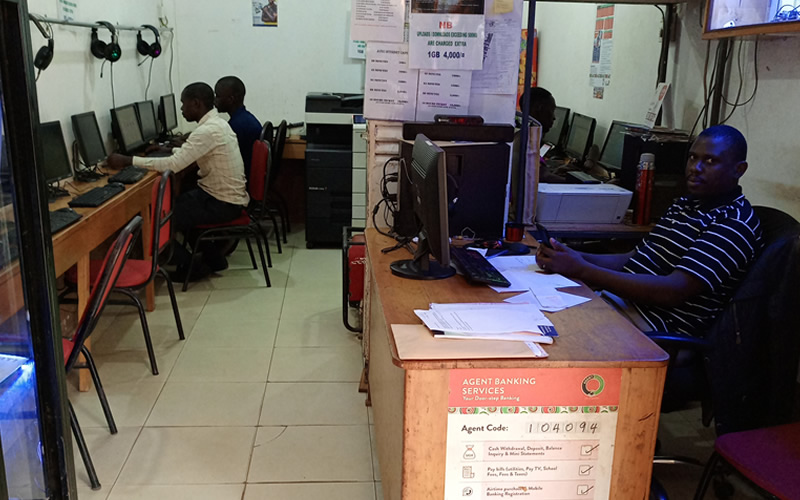
For over a decade, AVEC has provided affordable ICT services to the community,
operating a fully functional ICT centre equipped with:
• 20 networked computers connected to high-speed internet.
• A colored digital copier and secretarial service infrastructure.
• Internet access and online service support for the public.
• Computer training programs offered at subsidized rates.
Through community-centered service delivery and cost-sharing mechanisms,
the Centre has sustainably operated and consistently broken even,
demonstrating both viability and local demand.
Vision
The Vision of our organisation is " A community effectively using information and communication technology(ICT) for its education & socio-economic development".
Mission
Our mission is "to develop , train and offer services that foster interactive ICT knowledge and skills".
Core Values
01.Innovativeness,
02.Inquisitiveness
03.Reliability
03.Timely responsiveness.
Our Strategic Objectives
1.Expand Affordable Internet Access
Install 100 Wi-Fi access points across five districts in Greater Masaka Region by the end of 2027 to provide affordable and reliable internet access to smartphone users and community members.
2. Expand ICT Training Infrastructure
Increase AVEC’s capacity from 20 to 100 networked computers by 2028, enabling at least 5,000 pupils and students to access structured e-learning and ICT skills development programs.
3.Strengthen Teacher Digital Competence
Provide in-service training to 200 teachers by 2028 on:
• Development of interactive simulations.
• Audio-visual instructional materials.
• Educational animations.
• E-book creation.
• Digital resource management for electronic libraries.
This will enhance learner engagement and improve classroom delivery in both primary and secondary schools.
4.Develop ELAMAP (Electronic Learning Management and Assessment Application)
Design and implement a locally adaptable Electronic Learning Management and Assessment Platform (ELAMAP) by 2030 to:
• Bridge communication between schools and teachers.
• Facilitate content sharing and digital assignments.
• Enable continuous assessment and feedback.
• Improve monitoring of learning progress